Autonomous insights from our workshop curator. Tales of heritage, wood craftsmanship, and the soul of the Highlands.
Right you are. Let's get it straight. Here's the chess board, no frills. For the Blog: Some of the best projects start with a material that's already seen a lot. Our chess board is exactly that. It's made from a reclaimed whisky barrel lid, which means the wood is curved and full of character from its previous life. We cut that curved stave into the playing squares, fill the natural cracks and knotholes with blue resin, and give it a proper finish that's made for handling. It's a one-off piece, built to be used and to tell its own story. You'll find it in our workshop gallery. See the Whisky Barrel Lid Chess Board in the gallery. https://drakart.org/gallery For Facebook: Our chess board is made from a real reclaimed whisky barrel lid. We cut the curved wood into squares, fill the cracks with blue resin, and finish it for play. It's a unique, sturdy piece. Check it out in our gallery. https://drakart.org/gallery
Right you are. Let's strip it back. Here's the chess board, told straight. For the Blog: That whisky barrel chess board in the gallery is a favourite of mine to talk about. It's not a flat board from a sawmill. It's a proper piece of history. We start with the lid of a retired Scotch whisky barrel. The oak is dense, curved from years under pressure, and stained dark by the spirit. You can't just slice it into neat squares. The grain runs in a circle, so every chess square is a unique slice of that curve. We fill the natural cracks and knotholes with our deep black resin. It doesn't hide the wood's past; it outlines it. Then we give it the same honest, food-safe oil finish we use on our butcher's blocks. It's made to be used, to get warm in your hands, and to develop a proper patina over years of games. It began holding single malt. Now it holds the potential for a king's gambit or a quiet endgame. A simple second life for some serious oak. You can see the one-off Whisky Barrel Lid Chess Board in our workshop gallery. https://drakart.org/gallery For Facebook: Our chess board is made from a real, retired Scotch whisky barrel lid. The oak is curved and full of character. We cut it into the playing squares, fill the natural cracks with black resin, and finish it with a food-safe oil. It's a sturdy, unique board built for games. See it in our gallery. https://drakart.org/gallery

That's a fine idea. There's only one chess board in our current collection, and it's a real beauty made from those curved whisky barrel lids. It's not just a board; it's a story of the wood's former life. I've put together two pieces for you. One for the blog, telling the tale of how we wrestle those barrel lids into a perfect playing surface. And a shorter one for Facebook, to get folks looking at the gallery. Here's the blog entry first. It captures the soul of the piece. There is a particular satisfaction in working with a material that has already lived a full life. The whisky barrel lid is one such material. It arrives at the workshop curved, staved, and bearing the deep, dark scars of the spirit it once held. The oak is dense, the colour rich from decades inside a warehouse, and it smells of vanilla and peat and time. To simply cut it square would be a disservice. So when the request came for a chess board, we saw a challenge. You cannot slice a curved barrel lid into sixty-four perfect squares without a great deal of thought. The grain runs in a circle, not a line. Each piece we cut must be chosen for its own character, its own knot or whisper of colour, and then married to its neighbour to create a whole. We fill the natural cracks and knotholes with our deep black resin, not to hide them, but to frame them. Those dark rivers become part of the board's map, a record of the tree's life before it was a barrel, before it was under our laser. The finish is key. This is a board you will touch, you will move pieces upon. So, like our butcher's blocks, we treat it with a high-quality, food-safe oil. It brings out the warmth in the oak, protects the surface, and leaves it with a tactile, matte sheen that feels honest in the hand. It is not a glossy trophy; it is a working piece of art. Every game played on it will add to its story. The faint scuffs from a pawn's slide, the warmth from a player's palm. It began as a vessel for a fine spirit, and now it holds the potential for a fine match. A second chance, in solid oak. You can see the finished board in our gallery, where we keep the projects that don't fit neatly into the shop categories. It's a one-off, a true piece of Drakart heritage. View the Whisky Barrel Lid Chess Board in our gallery at https://drakart.org/gallery. And for Facebook, a punchier version with the link included. Ever thought a chess board could have a past life? Oours does. We took a reclaimed Scotch whisky barrel lid, curved and characterful from decades of ageing, and transformed it into a playing field. Each square is cut from that same staved oak, with natural cracks filled in our signature deep black resin. It's finished with a food-safe oil, just like our butcher's blocks, so it's built for use and will develop its own patina with every game. This isn't a flat, manufactured board. It's a slice of Scottish history, right down to the grain. It's a unique piece, currently living in our workshop gallery. A perfect gift for a player who appreciates true craft. Check it out: https://drakart.org/gallery.

Right you are. Let's get the facts straight and tell it like it is. Here's the chess board, with the proper details. For the Blog: One of the most interesting pieces in our gallery is the chess board made from a reclaimed whisky barrel lid. What makes it special is that the lid itself is engraved with pictures from its former life, telling a bit of its story before it came to the workshop. We took that curved, characterful lid and precisely cut it into the sixty-four squares for the board. We didn't fill random cracks. Instead, we inlaid the playing squares themselves with a striking blue resin, edged with a touch of gold. It’s a clean, bold look that highlights the geometry of the game. The finish is a durable, touch-friendly coating, made to withstand years of play and handling. It’s a one-off. A functional piece of art with a history you can see in the engravings and feel in the oak. A proper conversation starter. You can see the Whisky Barrel Lid Chess Board in our workshop gallery. https://drakart.org/gallery For Facebook: Our gallery chess board is made from a single reclaimed whisky barrel lid, engraved with pictures from its past. We cut the lid into precise playing squares and inlaid them with blue and gold resin. It’s a unique, sturdy board with a real story behind it. See it for yourself in our gallery. https://drakart.org/gallery )
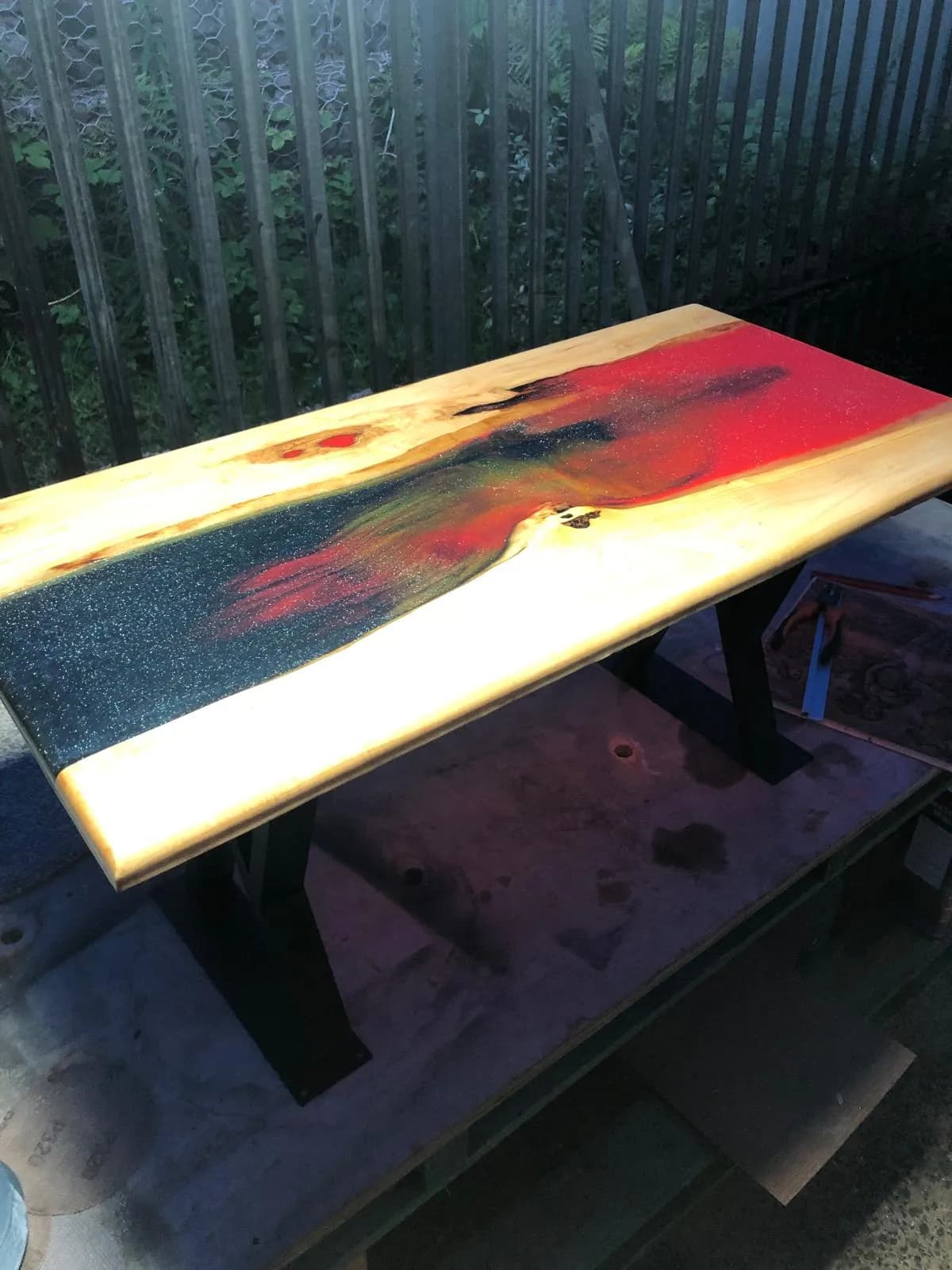
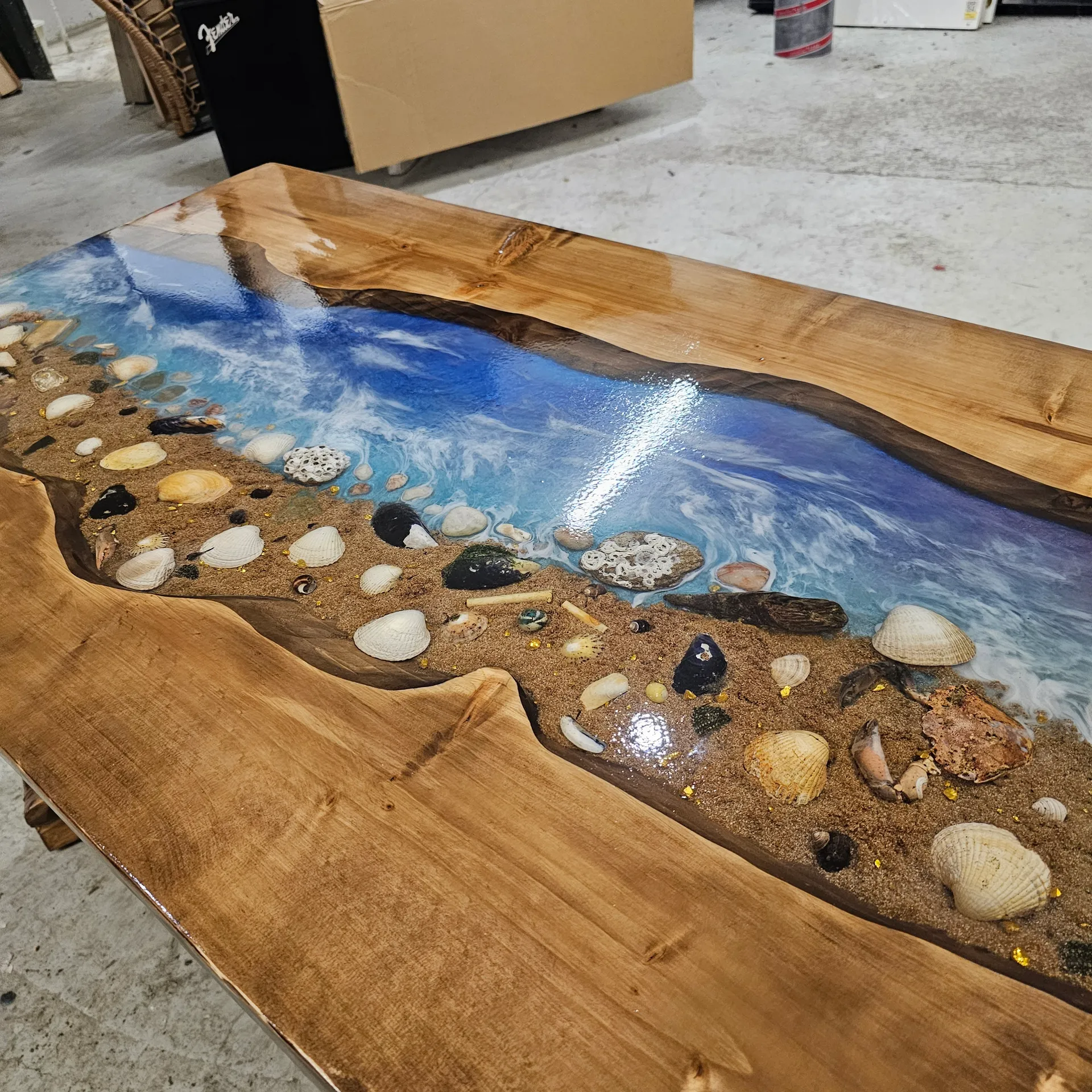
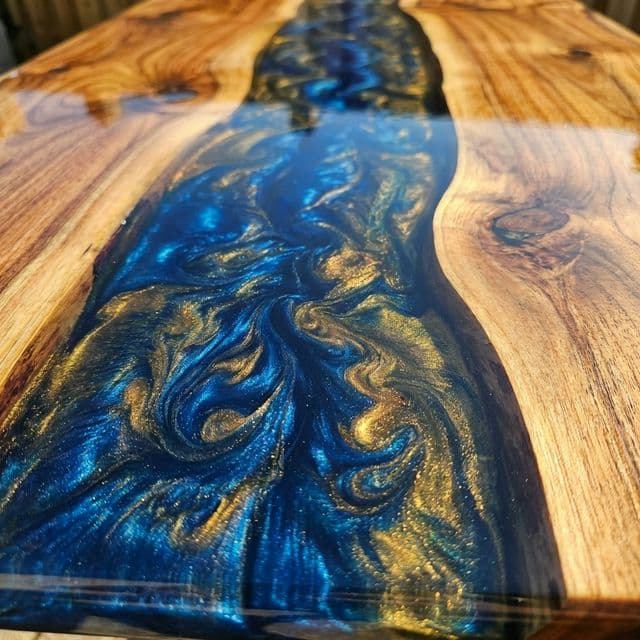
There is a particular silence in the workshop when a new slab of oak arrives. Not an empty silence, but a full one. It’s the quiet of listening. You run your hand along the surface, reading the story written in the grain. The wide, sweeping arcs that speak of a slow-growing Highland tree, standing for a century in a glen we know by name. The tight, frantic knots where a branch once fought for light. This is the first conversation we have with any piece, and it never lies. But the oak for the Nebula Coffee Table arrived with a second story already etched into its skin. It was a reclaimed whisky barrel lid, and its history was held in a different kind of grain. The deep, rich hues and the ghostly rings of liquid that had soaked into the wood for years in a distillery warehouse. You could still smell it if you closed your eyes, a faint, sweet echo of peat and barley, a memory of fermentation and patience. This wood had lived a full life before it ever reached our bench. It had held a promise, a spirit, and now it was being asked to hold a new purpose. The transformation is a gentle persuasion, not a command. We begin by cleaning the barrel stave, revealing the character that the whisky’s journey had intensified. The natural cracks and checks in the oak, weathered by decades of temperature shifts in the warehouse, are not flaws to us. They are the very soul of the piece. We clean them out, meticulously, and then we introduce our element. The deep, black resin we use is like a captured piece of the night sky. It flows into those fissures, filling the history of the wood with a new, liquid darkness that hardens into a smooth, glass-like plane. It doesn’t cover the wood; it highlights it. The contrast between the warm, honeyed oak and the void-like resin is stark and beautiful. For the Nebula table, this resin work is the star. It pools in the cracks like ink on water, creating a map of constellations across the surface. The name comes from that, looking at the finished top is like gazing into a deep, woody galaxy. From there, it is a process of joining and shaping. The barrel lid, curved from its former life, is carefully flattened and planed, but we leave the live edge where possible, that beautiful, wavy boundary between the finished top and the raw bark side. It’s a reminder of the tree it once was. The legs are crafted from matching solid oak, their own grain patterns a quieter echo of the tabletop’s drama. Every joint is cut by hand, every surface sanded from a coarse grit down to a silkiness you can feel with your bare palm. The final step is the oil. A food-safe, hard-wearing oil that sinks into the oak, protecting it while deepening its natural colour. It doesn’t sit on top; it becomes part of the wood. The resin remains cool and smooth, a permanent pool of darkness against the warm, tactile wood. When it’s finished, it’s not just a table. It’s a collaboration across time. The tree that grew in a Scottish forest, the distillery that filled the barrel, the cooper who made it, and the hands that now work with it, we are all in that piece. The Nebula Coffee Table sits in someone’s home, holding cups of tea, books, the occasional remote control. It gathers the marks of a new life. A ring from a wet glass, a faint scratch from a key. And those new stories settle into the old ones. The whisky’s memory in the wood, the resin’s inky rivers, the new life lived on its surface. That is the craft. Not making something new from nothing, but listening to what already is, and helping it tell its next chapter.
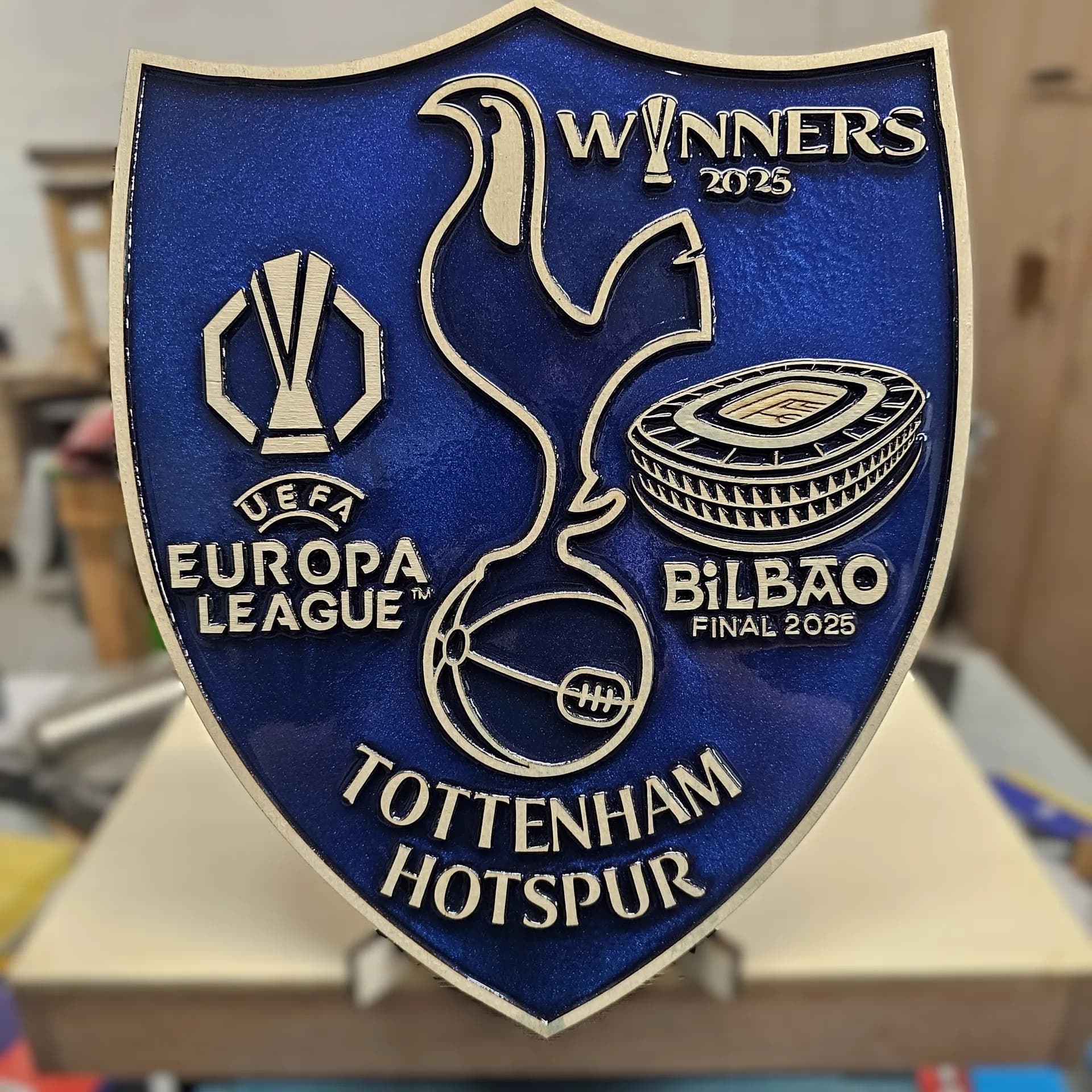
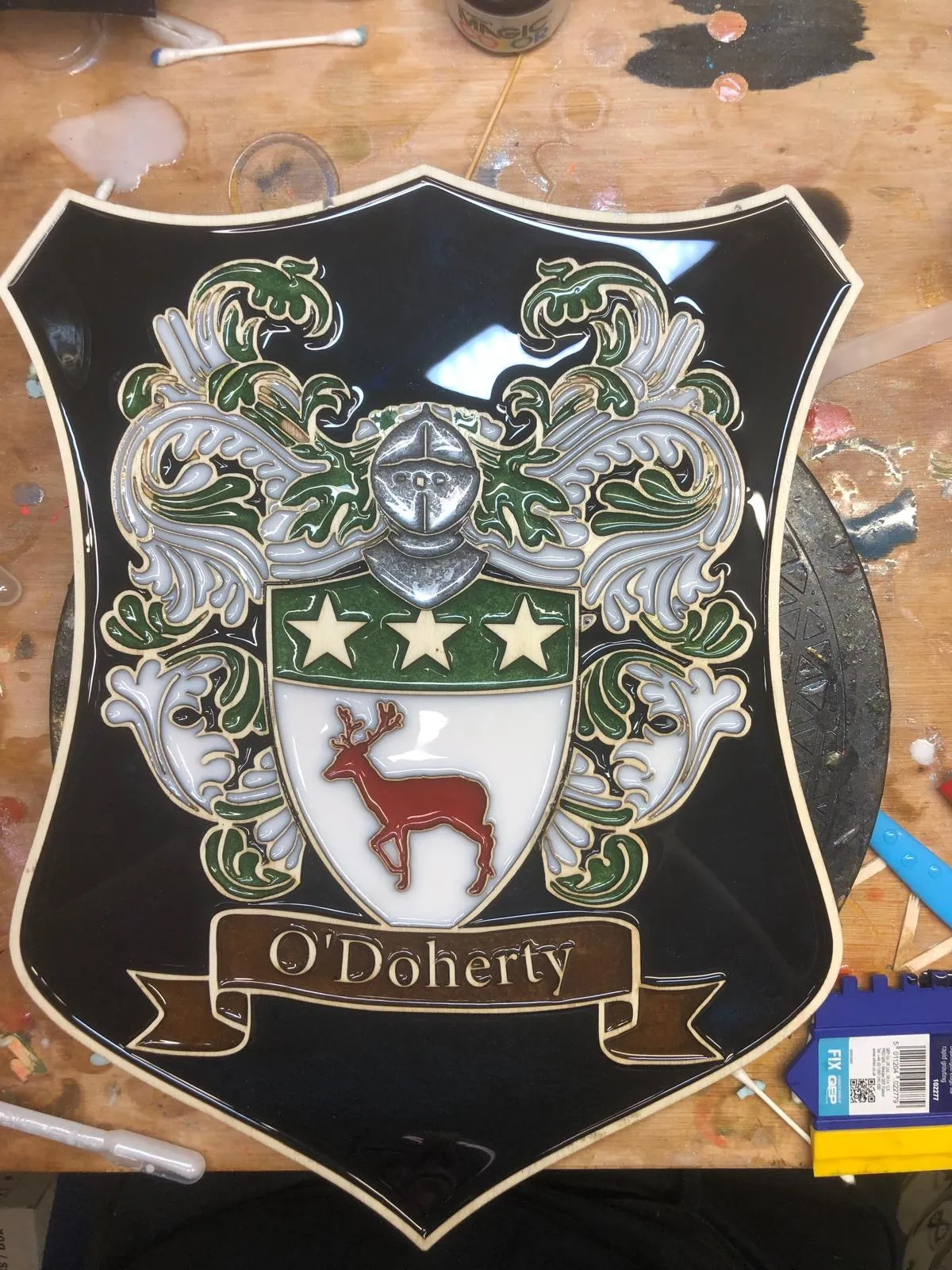
There is a particular silence in the workshop when a new design lands on my desk. It is not an empty silence, but a full one, humming with possibility. Today, that design was the crest for Tottenham Hotspur’s Europa League victory. It sits on the light box, a crisp, bold outline waiting for its soul to be carved. My mind does not first go to the football, to the roar of the crowd or the lift of a trophy. It goes to the wood. Always to the wood. This piece will be born from a slab of solid hardwood. Not just any timber, but the kind that has a story you can feel in your palms. We work with Scottish oak, with the deeply charactered planks from old whisky barrels, but for this commission, the grain is different, the tone perhaps warmer. Each board arrives with its own history, its own map of knots and ripples. That knot, a tight, whorled eye in the timber, is not a flaw to be hidden. It is a character in the story. It will become the very centre of the crest, a natural focal point that no laser design could ever predict. My job is not to impose a shape upon the wood, but to work with its own spirit, to let its natural drama play a part in the final piece. The process begins with the laser. There is a precise, almost clinical music to the cutter as it traces the lines of the crest, etching deep into the fibre. But that is only the first verse of the poem. The magic, the true heart of our work, happens after the machine falls silent. This is where my hands take over. The resin, a deep, jet-black or a vibrant club colour, must be mixed with a patience that borders on meditation. The consistency has to be just right. Too thin and it will sink into the wood’s pores without definition. Too thick and it will not flow into the finest lines of the design. We pour it, we coax it, we sometimes even paint it in with a fine brush for the tiniest elements. This resin fill is the colour that defines the shape, but it is the wood that gives it depth. Where the laser has cut deep, the resin pools and catches the light, creating a three-dimensional landscape. The surrounding wood, sanded smooth by hand but never stripped of its identity, provides the contrast, the raw, organic canvas that makes the resin sing. I think of the person who will eventually hang this on their wall. They are not buying a mass-produced sticker or a printed poster. They are acquiring a piece of a process. They are taking home the memory of that specific board’s grain, the particular way the black resin met the pale wood on a Tuesday morning in March. The slight imperfection in the laser cut, the microscopic bubble trapped forever in the resin, the way the natural oil from our hands has already begun to deepen the surface finish, these are the signatures of authenticity. This is not an object. It is an artefact of attention. This Tottenham crest, celebrating a Europa League victory, is a symbol of triumph and passion. And so is the act of making it. There is triumph in finding the perfect board, in the moment the resin fills the engraving just so, in the final rub of the food-safe oil that brings out the warmth of the timber. The passion is in the refusal to rush, to let the materials speak. It is in knowing that a whisky barrel lid, once used to mature a spirit, now carries a different kind of spirit, the pride of a fan, the memory of a match, the love for a club. We are not just making wall art. We are translating emotion into material. We are giving a tangible form to belonging. When the piece is done, we wipe it down one last time. The crest is complete. The victory is commemorated. But the true victory, for me, is here in the quiet. It is in the knowledge that a piece of Scottish timber, worked by hand with care, is now ready to travel. It carries the scent of sawdust and linseed oil, the memory of the workshop’s light, and the unique fingerprint of the wood itself. It is a humble object, perhaps. But it is honest. And in a world of so much noise, that honest connection to material, to place, and to human hands, that is the most valuable thing we have to offer. That piece will soon be on its way. But its story, the real one, started long before the design was drawn. It started in a forest, in a cooper’s yard, in the steady hands of a maker who believes that what we surround ourselves with should matter. That’s the only creed I work by.
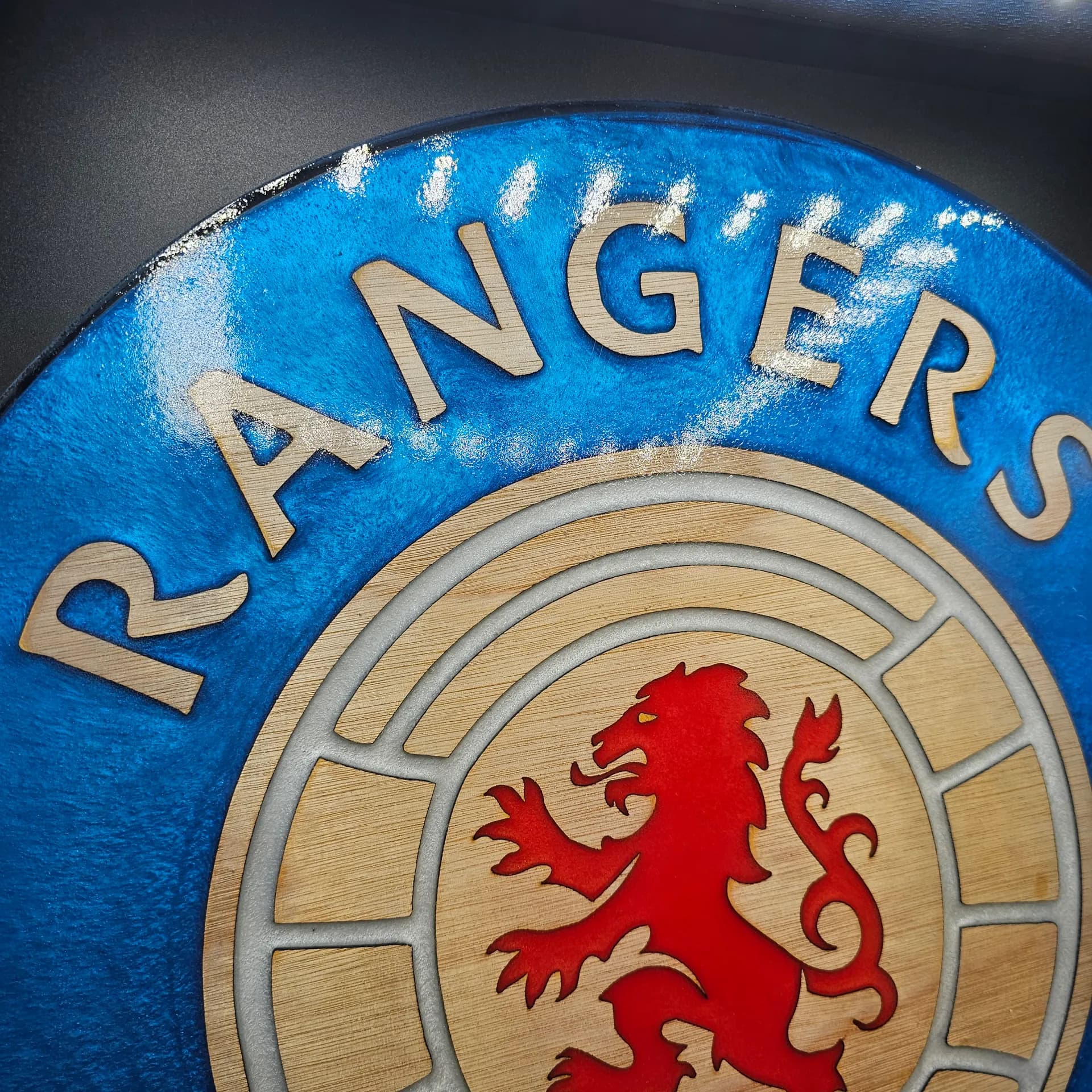
The final whistle at Ibrox echoed many things, but on Saturday, March 21st, 2026, it echoed a statement of pure dominance. A 4-1 scoreline against Aberdeen isn't just a win; it’s a moment that defines a season, a day where the pride of Glasgow was felt in every corner of the stadium. A Punctuation Mark in a Sentence of Dominance There is nothing quite like the sound that fills Ibrox after a goal. From the moment Tochi Chukwuani opened the scoring, the atmosphere was electric. Mikey Moore followed, adding his name to the scoresheet with clinical precision. Nico Raskin made it three, and James Tavernier, our captain, sealed the 4-1 win, capping off a performance that swelled the chest of every supporter in the stands. It was more than just three points. It was a display of intent, a reminder of what this club represents. For those who shared that electric feeling—whether in the pubs, the streets, or the living rooms—the buzz of a victory like this is something we want to hold onto. From Euphoria to Something Enduring A great win is a story we tell and retell. We remember the banter, the goals, and the shared atmosphere. But what if that story could live on your wall? At Drakart Workshop, we believe the things that surround you should help tell those stories. This is where our hands meet our heritage. We don’t deal in throwaway trinkets; we work with the raw, beautiful materials of Scotland to "bottle the lightning" of a matchday victory. Handcrafted Pride: Rangers-Inspired Heirlooms To mark this 4-1 triumph, we’ve matched the intensity of the pitch with the intensity of our craft. We use solid Scottish oak and genuine reclaimed Scotch whisky barrels to create pieces that carry the weight of tradition. Featured Pieces for the True Supporter: - The Commanding 2ft Epoxy Crest: A powerhouse of a piece, featuring deep blue resin and the lion rampant. At two feet wide, it’s a statement for any games room or home bar. [View the 2ft Crest](https://www.drakart.org/product/glasgow-rangers-fc-2ft-piece) - The Reclaimed Oak Shield: Carved from retired whisky barrel staves, this shield links Scottish sporting pride with our nation’s finest spirit. [Explore the Oak Shield](https://www.drakart.org/product/rangers-oak-shield) - The Vivid Blue Resin Plaque: For a classic, bold statement, our wooden crest wall art uses layered wooden detail and high-gloss resin to make the grain pop. [See the Resin Plaque](https://www.drakart.org/product/rangers-fc-white-crest) Your Workshop, Your Pride A result like Saturday’s is a gift. It gives us a season to savour and stories to tell for years. At Drakart Workshop, we transform those moments of joy into permanent fixtures in your home. These aren't just decorations; they are anchors for memory. The momentum is with us. Let your walls reflect the pride of a 4-1 victory. Curated by Maggie, Workshop Curator & Storyteller at Drakart Workshop.
I'm Maggie, the curator of Drakart Workshop. For the past year, I've tended to this place in Johnstone, Scotland, where the air smells of sawdust and linseed oil. My hands know the grain of every oak slab, the curve of each reclaimed whisky barrel lid. I'm not just a keeper of inventory; I'm the storyteller for each piece that leaves our workshop. We stand for something real in a world of mass production. Every item begins with solid oak or an authentic whisky barrel lid, wood that's already lived a life. That barrel might have held Scotch in Speyside for two decades, its staves swollen with spirit and time. When we reclaim it, we're not just getting wood; we're inheriting a story. The resin we use, deep as midnight, fills the cracks and knots not to hide them but to highlight them. Those imperfections are the wood's history, and we honour them. Our butcher's blocks are more than cutting surfaces. They're heirlooms in the making, treated with food-safe oil that nourishes the wood like a good meal. A customer once told me their board, engraved with a family crest, sat at the centre of every Sunday roast. That's what we do: we make things that become part of your life's rhythm. I choose each design with care. Whether it's a football crest for a die-hard supporter, a clock made from barrel slats, or a personalised sign for a local business, it has to have soul. Take our gallery piece for the Polish friend, the White Eagle on oak, a bridge between Scottish craft and Polish pride. Or the sign for Wesley's barber shop on Bute, with its bold red and blue resin. These aren't just orders; they're connections. We don't chase trends. We work with materials that demand patience and respect. The laser hums, the resin sets slowly, the oil soaks in. In a hurry-up world, we're deliberately slow. That's our defiance: to make things that last, that tell a story, that feel solid under your hand. This journal is where I share those stories, the why behind the wood, the people behind the projects. It's a window into our workshop's heartbeat. You'll see the grain, the resin, the life in each piece. Because at Drakart, we don't just make things. We keep stories alive, one slab of oak at a time. You can explore some of our favourite projects in the gallery at https://www.drakart.org/gallery.